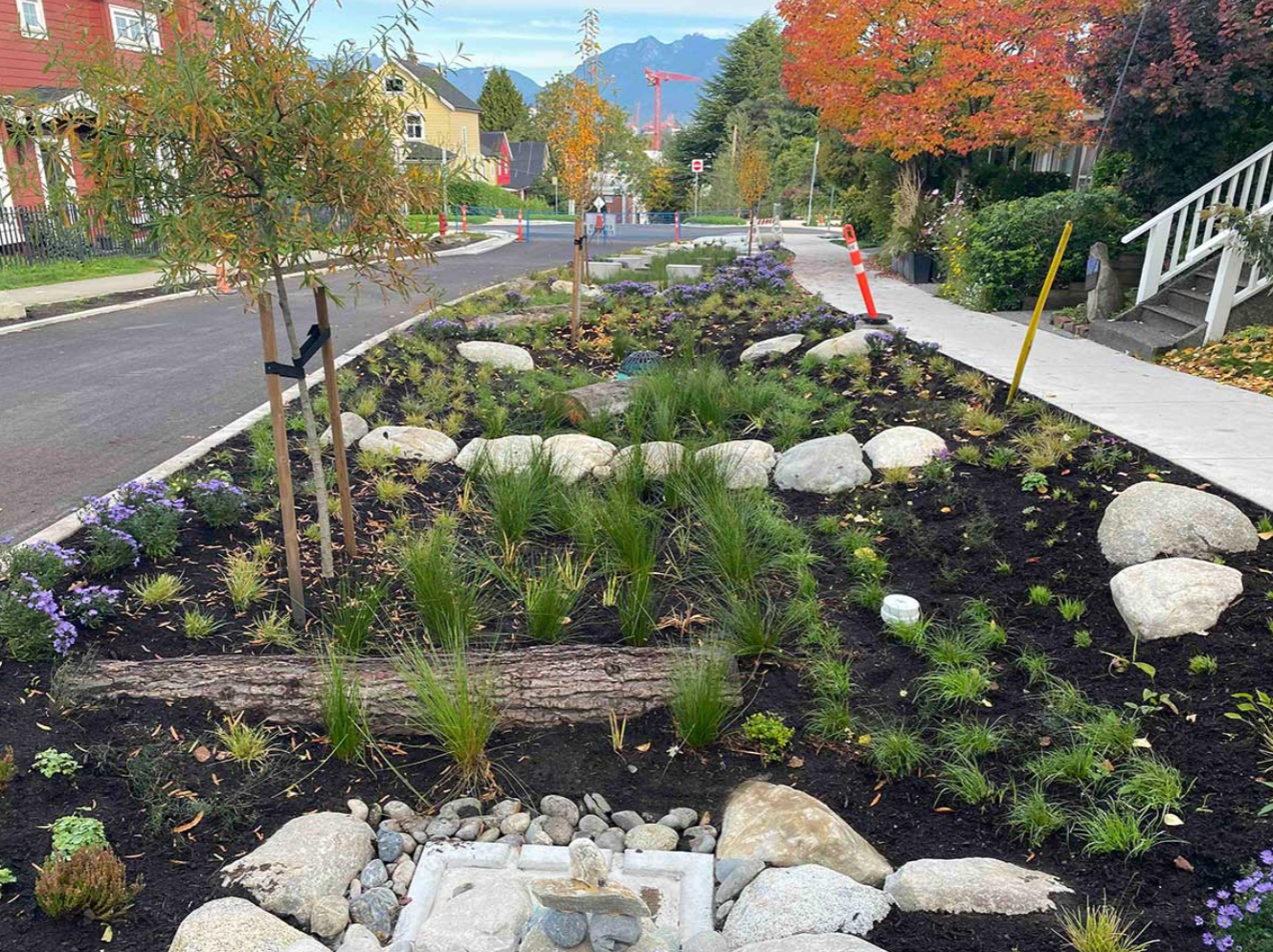
Recently, I had the privilege of speaking with some staff members at the City of Vancouver, and its affiliated Park Board, and feel strongly that their work is an excellent example of enhancing the health of hydrological and terrestrial systems. It embodies sustainable approaches to addressing aspects of the environmental crisis as they present themselves in an urban context, and seeks to reduce risk and strengthen resilience in the face of climate turbulence and uncertainty. Finally, it uses overarching strategies and programs for facilitating greater sustainability and promoting an interdisciplinary approach with some interjurisdictional collaboration.
The Work on the Ground
The people I interviewed are employees either of the Engineering Department at the City or of the semi-autonomous Vancouver Park Board. Most are not planners, but are trained in landscape architecture or horticulture, and exhibit a strong interest in and knowledge of ecology at both the micro and macro scales.
Water-Related Work
While the work reviewed here can be broadly broken into water-related or terrestrial ecosystem-related, they are very much interconnected. On the water side, the City and Park Board are conducting a number of parallel initiatives. One involves Still Creek1, a tributary of the Brunette River, that has its headwaters in Vancouver and flows through Burnaby into the Fraser River via the Brunette. It is currently located in a largely industrial area with 55% impervious land cover and only 7% tree cover.
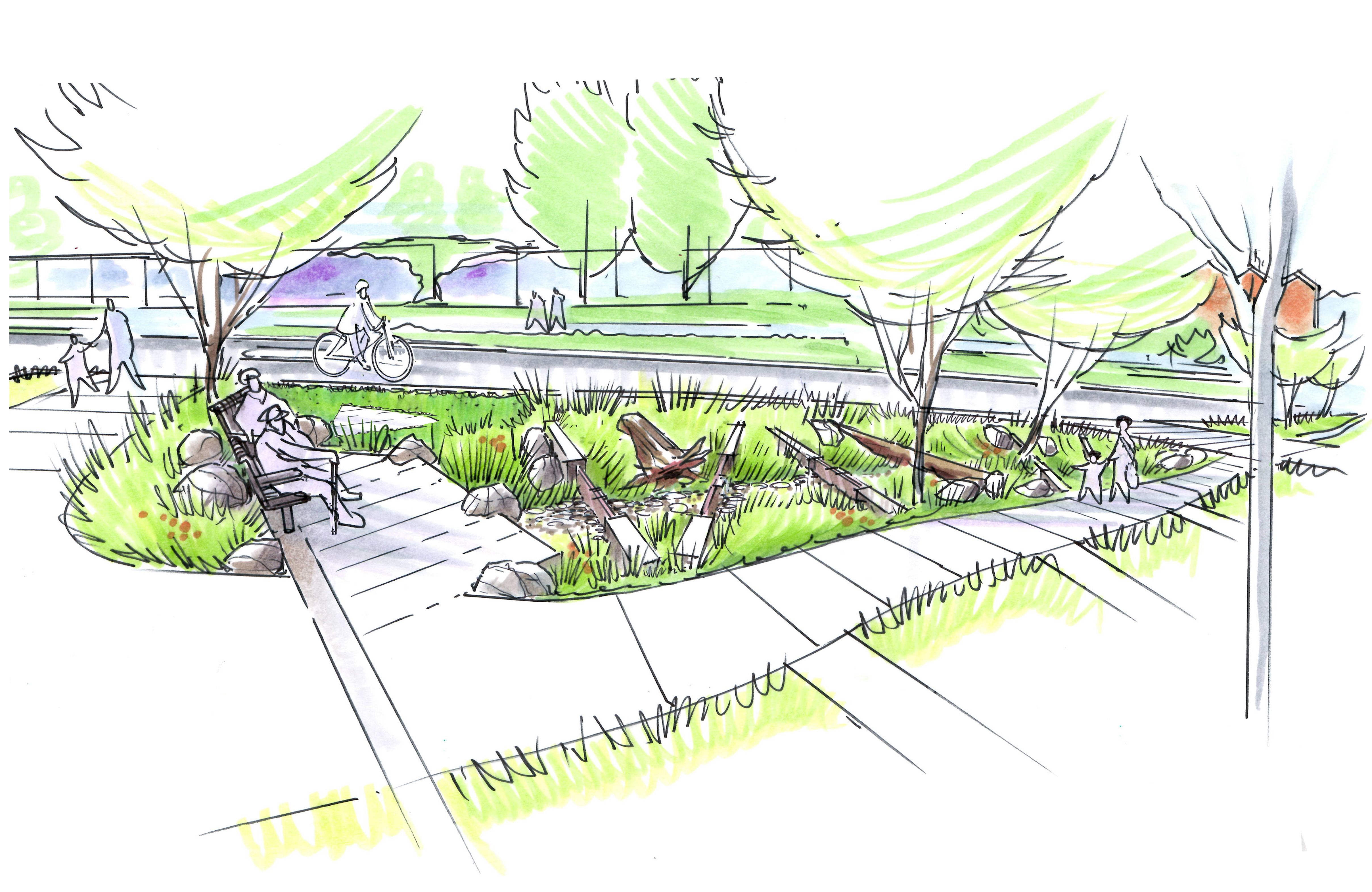 Preliminary design of the St. George Rainway (City of Vancouver)
City staff have been working on several fronts. They have been using trees and shrubs to revegetate the stream corridor, removing concrete and naturalizing banks, and have a long- term plan to ‘daylight’ portions of the creek not already above ground through land acquisition as opportunities arise and resources permit. They have also been conducting a campaign of public education though interpretative signage, enhancing recreation opportunities, and working with an environmental arts organization to promote a sense of stewardship of the Creek. Indeed, a Still Creek Streamkeepers2 group has been established. One positive outcome of these efforts is that chum salmon have come back to spawn for the first time in over 80 years. This has led Still Moon Arts Society3 to organize a Fish Fest every year to celebrate the spawning event.
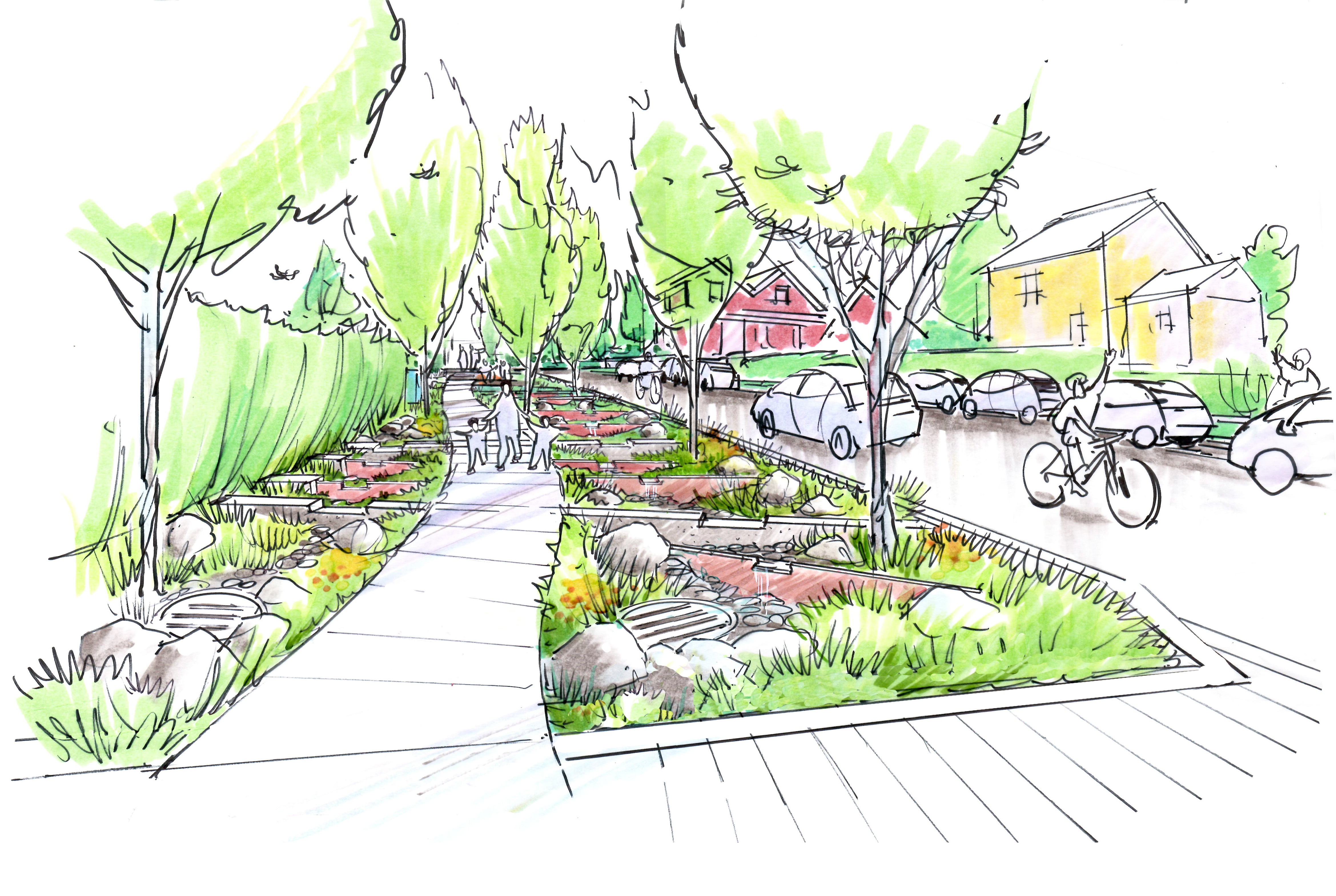 Preliminary design of the St. George Rainway (City of Vancouver)
A second water-related initiative involves lessening flood risk by increasing the permeability of portions of parks and restoring wetlands and seasonal streams and ponds. They have also worked on enhancing and restoring streams in parks, such as the creek in
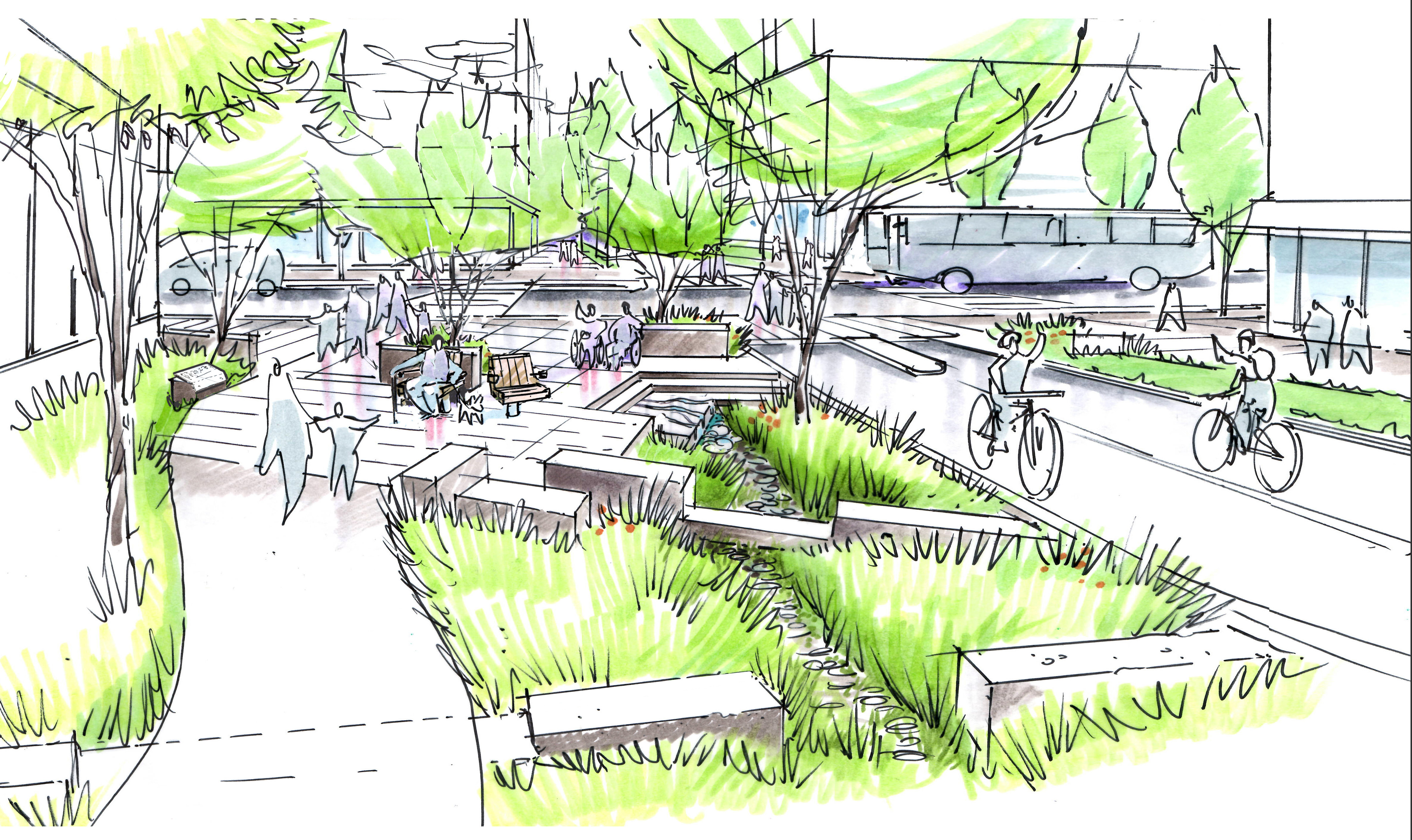 Preliminary design of the St. George Rainway (City of Vancouver)
Tatlow Creek Park in Kitsilano. A remnant stream in parts of the park already exists, but the Park Board recently re-created a new naturalized section4 near English Bay that filters stormwater before discharging it into the ocean. A particularly interesting hydrological initiative are the blue-green systems and rainways created in various parts of the city. Two of the ones I saw firsthand were notable in different ways. The eight block-long Richards Street blue-green system5 downtown features trees planted at regular intervals to separate motorized vehicles from a bike lane. The trees are connected by a ‘tree trench’ that enables stormwater to infiltrate, be absorbed by trees, or purified by soil before being released into the Burrard Inlet. The St. George Rainway6 in the Mt. Pleasant neighbourhood is four blocks long and runs along a part of the course of the now-submerged St. George Creek. It features a winding interconnected series of gardens featuring indigenous plants, places for community members to gather, community art, and interpretative signage. It is also car-free for most of its length and will be extended by another two blocks in the coming years.
Terrestrial Ecosystems
The work that the City and the Park Board are doing on terrestrial systems and green space is also diverse. What’s discussed here is merely a sampling of that work. One area involves the naturalization of portions of parks. One form this takes is the creation of pollinator meadows7 in 25 parks and Park Board-owned golf courses. These have been shown to attract bees, butterflies, bats, and birds, including rare species. They also improve habitat for plants and animals, fungi and microbes, lower ambient temperatures, and retain moisture in the soil which benefits trees during dry periods. Because they require less maintenance than grass, they produce fewer greenhouse gas emissions. One side-benefit of this is that it has contributed to the public being more accepting of less manicured park landscapes, and they also provide inviting places for picnicking and leisurely strolls. Pollinator meadows8 are now being extended to major boulevards in various parts of the city.
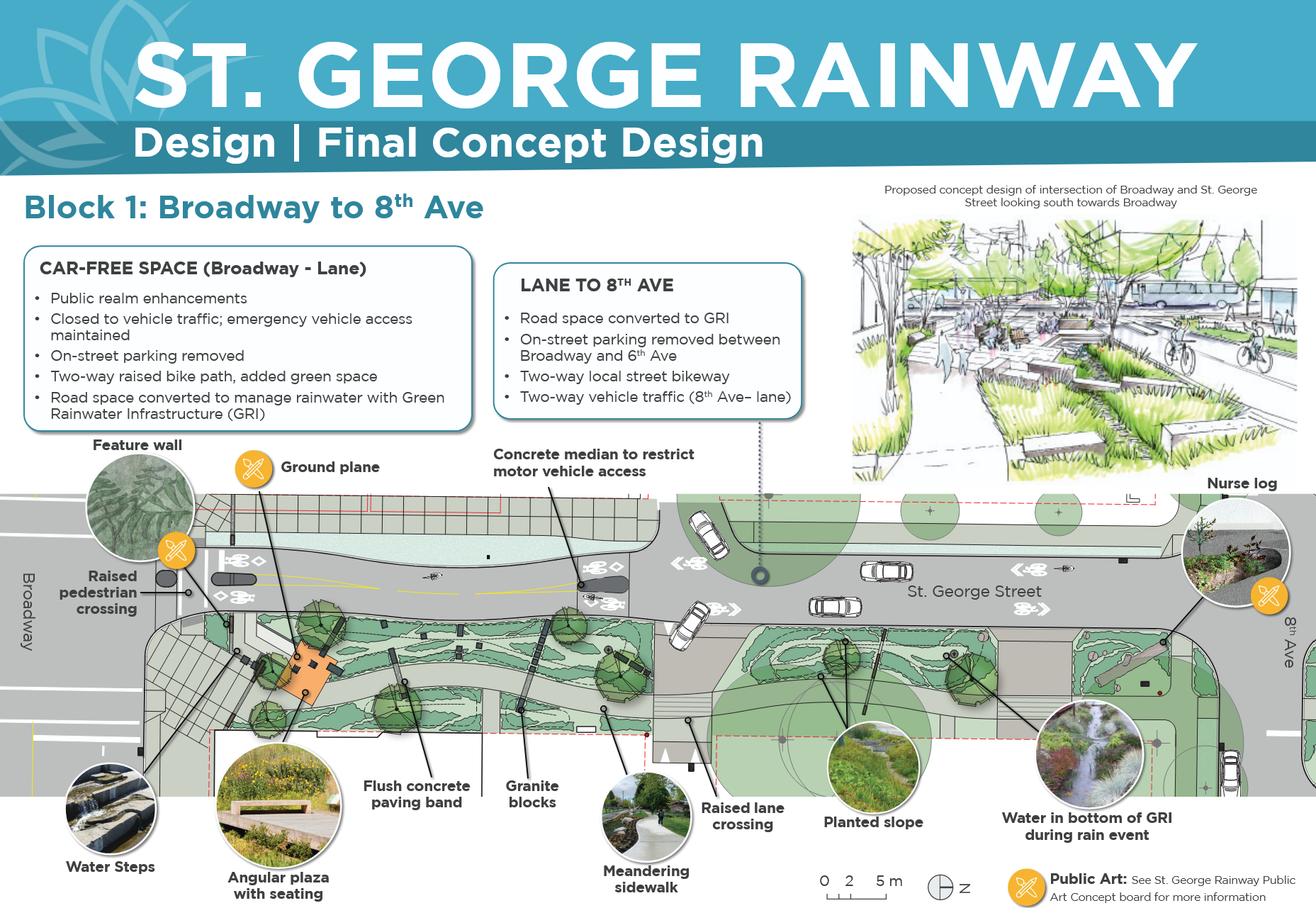 Approved design of the St. George Rainway in Vancouver, British Columbia (City of Vancouver)
All of this is occurring against the backdrop of the Park Board’s Biodiversity Strategy9 formulated in 2016, which seeks to “[i]ncrease the amount and ecological quality of Vancouver’s natural areas to support biodiversity and enhance access to nature.” The Park Board, in addition to naturalizing parts of parks and seeking to enhance biodiversity, is partially switching from annuals to perennials to reduce the need for resource inputs. It also has its own nursery to make accessing indigenous plants easier and also uses the nursery to produce food for food-insecure residents10. One additional interesting experiment is the creation of two micro-forests11 on park land inspired by the ‘tiny forest’ Miyawaki forest model originating in Japan.
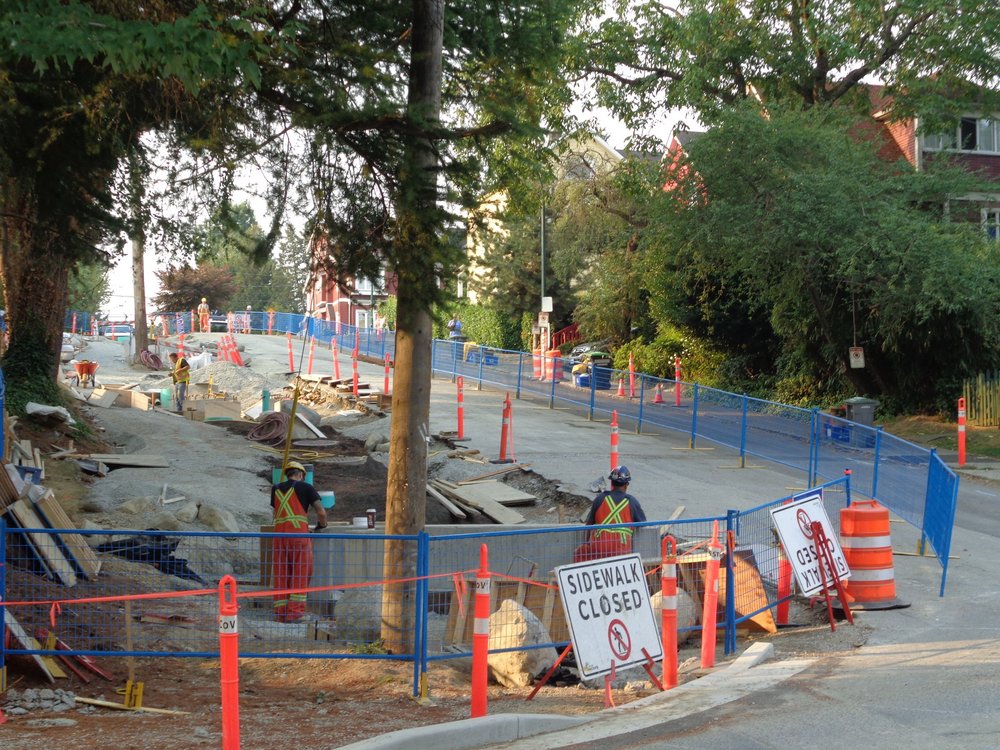 Construction of the St. George Rainway in Vancouver (City of Vancouver)
An initiative involving the City is the promotion of naturalized greenways12 though different neighbourhoods of the city. As the greenway website states, “[n]eighbourhood greenways are small-scale, local connections for pedestrians and cyclists linking parks, natural areas, historic sites, amenities, and commercial streets.” There are nine in total in the city. A more comprehensive approach is also underway in the form of an ecological network13 for habitat enhancement. A draft document was released in August 2024 that offered an assessment of the strengths and weaknesses of existing habitat, its type and location, and how existing green links could be welded over time into a robust network of ecological ‘nodes’ and ‘corridors’.
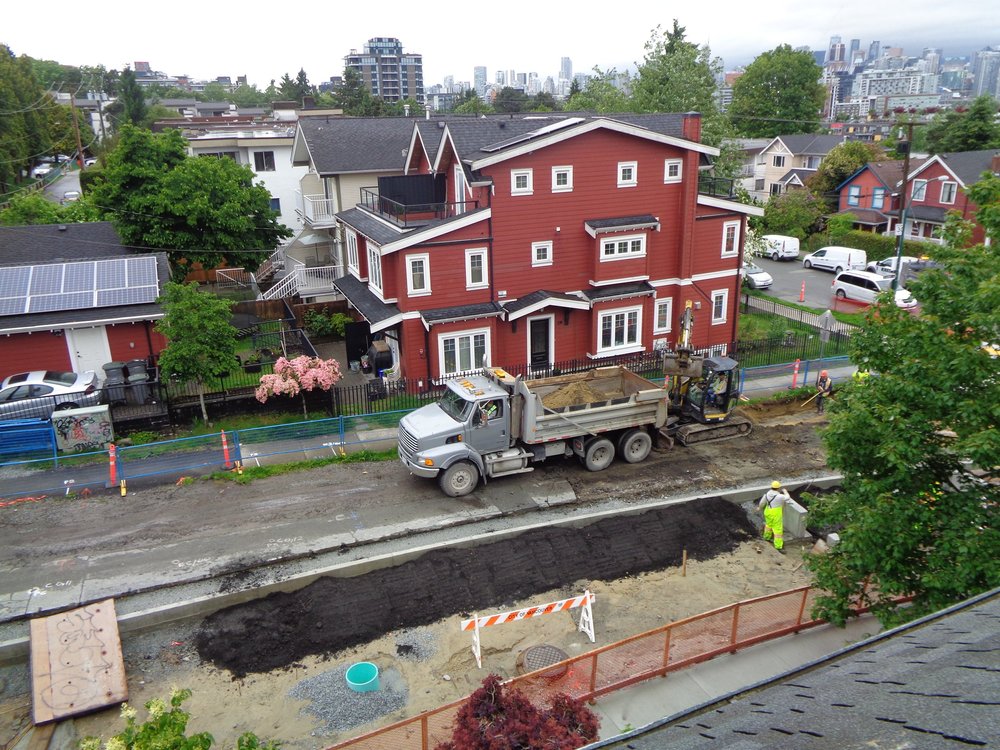 Finishing touches on the St. George Rainway underway. (City of Vancouver)
Another initiative is the Green Streets14 program involving plantings on street corners and traffic circles for aesthetic and habitat value. These gardens serve numerous purposes. They bring neighbours together (the gardeners are all volunteers), beautify streets, increase permeability, and provide habitat for pollinators, and arguably have a traffic calming effect. Volunteer gardeners are provided with free compost, advice from master gardeners, advance notice of available plants, and more. A final component is the City and Park Board’s Community Garden program15. Where it occurs on public land, it is driven by non-profit organizations who manage the gardens through agreements to use public lands, with similar agreements in place to use private lands. The
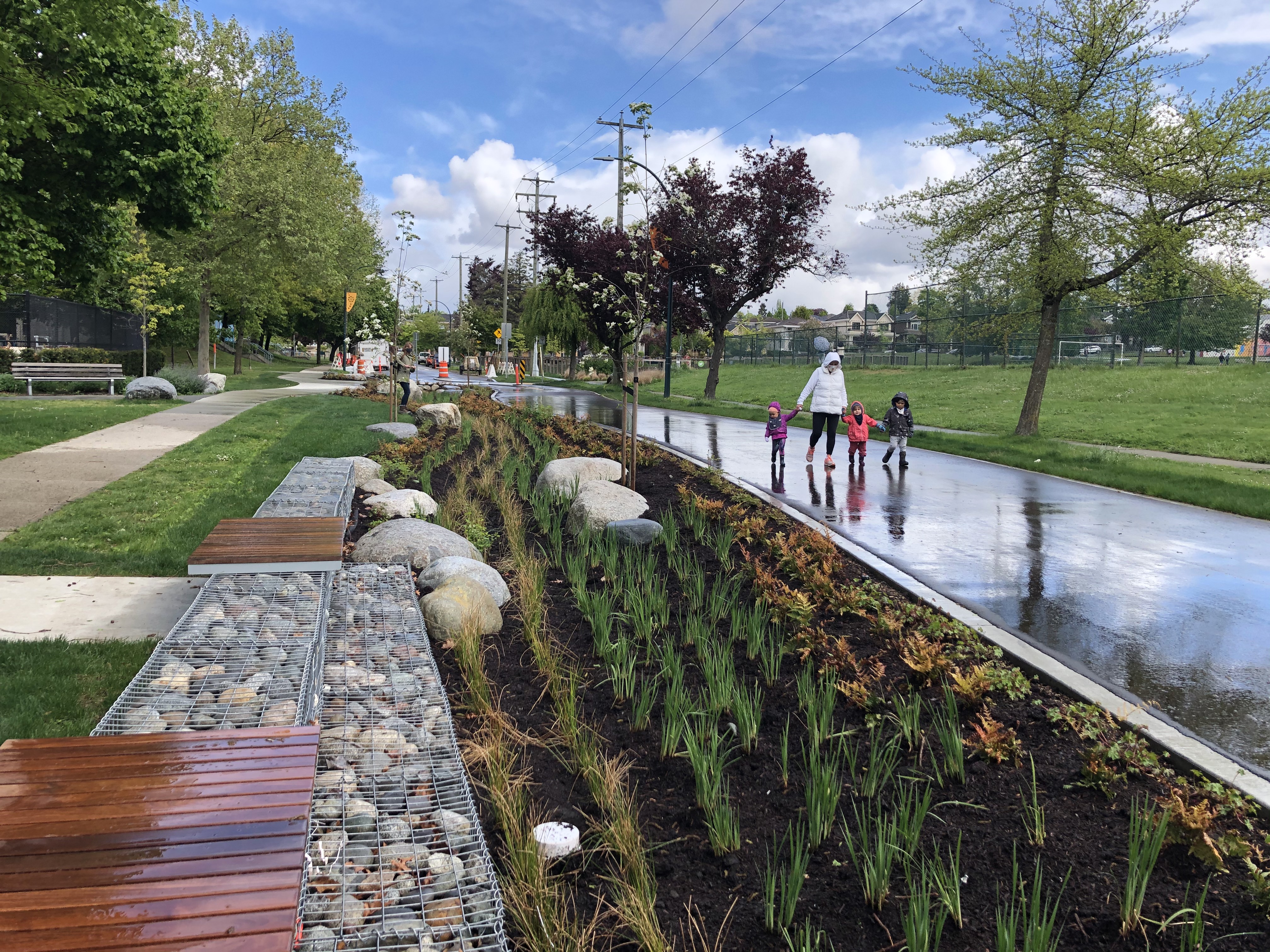 Completed St. George Rainway, complete with actual rain. (City of Vancouver)
latter often occur on a temporary basis on properties awaiting development. This is advantageous for landowners as they are eligible for reduced property taxes under this arrangement. There are currently 25 gardens on city lands, 61 on Park Board land, and 79 on private land. In contrast with Green Streets, these are mainly – but not exclusively – used to grow food.
Conclusion
Overall, the work that City and Park Board staff are doing is quite exemplary, In the next instalment, I will offer an assessment of this work from various angles. There are some storm clouds on the horizon. The ABC Party, first elected in late 2022, has made it its mission to dismantle the Park Board16. The argument for abolishing it is allegedly to improve efficiency, but – if implemented – how many of the people doing the work will lose their jobs along with the programs? Only the future will tell.
-
https://vancouver.ca/home-property-development/still-creek-enhancement.aspx ↩
-
https://vancouver.ca/news-calendar/first-creek-restored-as-part-of-tatlow-park-renewal-july-2024.aspx ↩
-
https://vancouver.ca/files/cov/green-infrastructure-richards-street.pdf ↩
-
https://vancouver.ca/files/cov/green-infrastructure-richards-street.pdf ↩
-
https://thetyee.ca/News/2023/08/24/Rainways-Could-Restore-Raincouver/ ↩
-
https://vancouver.ca/parks-recreation-culture/pollinator-meadows.aspx ↩
-
https://vancouver.ca/parks-recreation-culture/biodiversity.aspx ↩
-
https://cityfarmer.info/canada-vancouver-park-boards-sunset-nursery-are-growing-produce-to-feed-the-hungry/ ↩
-
https://parkboardmeetings.vancouver.ca/2024/20241209/REPORT-GeneralManagersReport-20241209.pdf ↩
-
https://vancouver.ca/streets-transportation/greenways-for-walking-and-cycling.aspx ↩
-
https://blogs.ubc.ca/greennetworks/files/2017/08/APP-1-The-Ecological-Network-Sept-4-2014-with-maps.pdf ↩
-
https://vancouver.ca/home-property-development/green-streets-program.aspx ↩
-
https://vancouver.ca/people-programs/community-gardens.aspx ↩
-
https://vancouversun.com/news/vancouver-park-board-fate-referendum ↩